



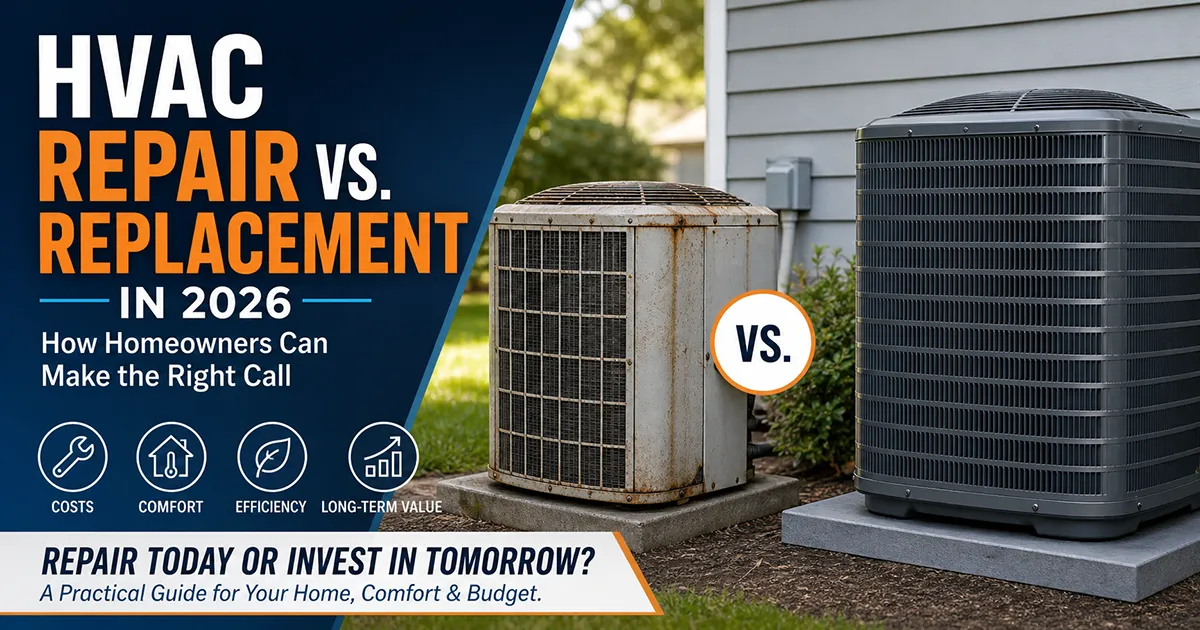
Your HVAC system never seems to pick a good time to fail. It waits for the first heat wave of summer or the coldest night of January, and then it lets you know. When that happens, you're suddenly facing a decision that feels bigger than it probably should: pay for another repair, or bite the bullet and replace the whole thing.
That decision has gotten more complicated in 2026. Energy costs are on more homeowners' minds than they used to be. New efficiency standards have changed how people compare equipment. And many systems installed 10 to 20 years ago are now at the age where things start breaking more often. People are also paying closer attention to indoor air quality, smart thermostat compatibility, and what a newer system might mean for their home's resale value.
Here's the thing, though: replacement isn't always the right answer. A newer system dealing with a minor issue may just need a straightforward repair. An aging system with climbing utility bills, uneven temperatures, and a growing repair history may be telling you something else. This guide walks through how to think about HVAC repair vs. replacement with more confidence, so you can make a decision that actually fits your home, your comfort, and your budget.
Why This Decision Feels Heavier Than It Used To
Your heating and cooling system does more than keep the house at a comfortable temperature. It affects monthly energy bills, indoor air quality, humidity levels, how quietly the house operates, and the overall livability of the space. It can also affect resale appeal, since buyers pay attention to the age of the HVAC system when they're evaluating a home.
In 2026, homeowners are thinking further down the road. A service call that gets the system running again may feel like the cheapest fix today, but repeated repairs add up fast. Older systems also tend to use more energy to produce less comfort, which means the real cost includes both repair bills and higher utility expenses month after month.
Updated efficiency ratings, including SEER2 ratings for cooling equipment, have also changed how people compare systems. Newer equipment is built to meet higher performance standards than most older units. That doesn't mean every homeowner needs the most advanced model available, but a properly installed, energy-efficient system can offer better temperature control, quieter operation, and improved energy management over time.
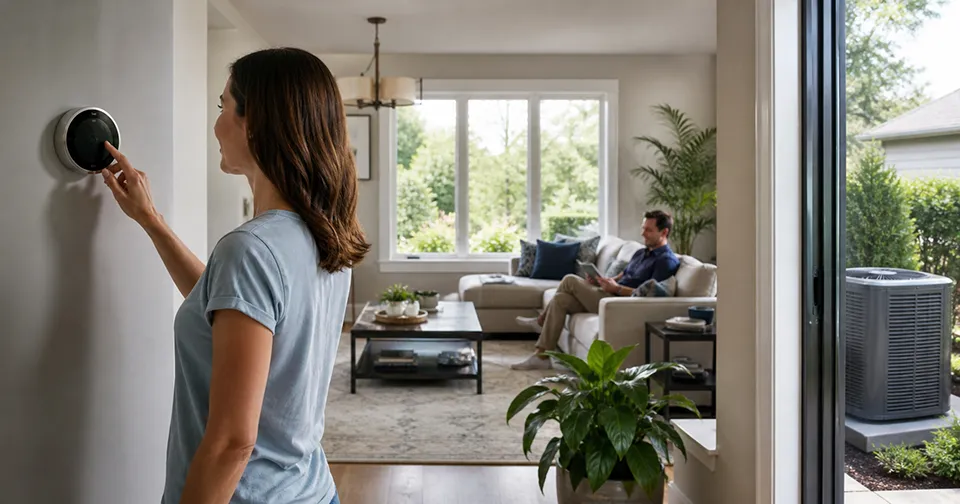
Technology has genuinely improved, too. Many modern systems pair well with smart thermostats, offer two-stage or variable-speed operation, and support better indoor air quality upgrades. If your home has hot spots, cold rooms, sticky summer air, or a system that runs constantly without keeping up, a replacement may fix comfort problems that another repair simply can't.
Warning Signs That Point Toward Replacement
Age is one of the first things to consider. Most heating and cooling systems last around 10 to 15 years, though a well-maintained furnace or central air conditioner can sometimes push past that. Heat pumps may wear faster when they run year-round for both heating and cooling.
Age alone doesn't tell the whole story, though. A well-maintained 14-year-old system may still have useful life left. A neglected 8-year-old system may already have serious problems. Maintenance history, installation quality, usage patterns, and the condition of major components all factor in.
Replacement becomes worth serious consideration when the system is 10 to 15 years old or older and performance is declining. If repair calls are becoming a regular thing, especially more than once per season, the system may be moving from occasional maintenance into a pattern of unreliability. A repair here and there is normal. A new problem every few months is a different situation.
Rising energy bills are another signal worth paying attention to. If your household habits haven't changed but heating and cooling costs keep climbing, the system may be working harder than it should. Dirty coils, worn parts, leaking ducts, aging motors, and failing controls can all make the system run longer to do the same job.
Comfort problems deserve attention, too. Rooms that never feel right, weak airflow, poor humidity control, loud noises, frequent cycling, and a system that struggles to reach the thermostat setting can all point to bigger issues. Sometimes these can be repaired. Other times, they signal that the equipment is approaching the end of its lifespan.
Major component failure is often where the repair-or-replace question gets serious. A failed compressor, heat exchanger, blower motor, or evaporator coil can be expensive to fix. On an older system, putting a large amount of money into a single major repair may only delay replacement by a short stretch.
Outdated refrigerant can also complicate the picture. If an older air conditioner uses refrigerant that's harder or more expensive to source, future repairs may cost significantly more. A new system starts to look like a better long-term path.
The Cost Question: Running the Numbers
Most homeowners want a clear financial rule, and the 50% guideline is a reasonable starting point. If a repair costs more than half the price of a new system, replacement tends to be the stronger investment, especially when the system is older, inefficient, or likely to need more repairs soon.
A smaller repair on a newer system is a different calculation. A bad capacitor, faulty thermostat, clogged drain line, worn belt, dirty coil, or small electrical part doesn't automatically mean the system should be replaced. When the system is under 10 years old, has been reasonably maintained, and still heats or cools the home evenly, a repair often makes good sense.
The bigger mistake is judging the decision from a single repair estimate. Repeated service calls matter. A $400 repair may not sound terrible on its own, but several repairs in a year change the math in a hurry. Add higher utility bills and the inconvenience of breakdowns, and the short-term savings start to look less appealing.
It's also worth thinking about replacement value, not just replacement cost. A new system can reduce repair risk, improve comfort, support better efficiency, and come with warranty protection. Depending on the equipment and your situation, rebates, tax credits, manufacturer promotions, and financing options may make an upgrade more manageable than expected.
Timing matters, too. Emergency replacement during a summer heat wave or the middle of winter is stressful. Planning ahead gives you time to compare options, ask good questions, and choose equipment that fits your home instead of rushing into whatever's available fastest.
What You Actually Gain From a New System
A new HVAC system won't magically eliminate your utility bills, and no responsible contractor should promise that. Modern equipment can reduce wasted energy and help your home operate more efficiently, but the results depend heavily on proper sizing and installation.
Older single-stage systems often run at full power, shut off, and then restart. That pattern creates temperature swings and higher energy use. Two-stage and variable-speed systems run in a steadier way, which tends to improve comfort and humidity control and can make the home feel more consistent from room to room.
Smart thermostats work well alongside newer systems. Better scheduling, remote access, and usage tracking make it easier to avoid heating or cooling an empty house. A smart thermostat can't fix failing equipment, but paired with a properly installed system, it supports better comfort and more efficient operation.
Modern equipment also tends to run quieter than older units. If your current system rattles, hums loudly, or startles people when it kicks on, that can make a noticeable difference. New systems may also allow for improved filtration, air purification, humidification, dehumidification, or ventilation upgrades, depending on what your home actually needs.
For homeowners thinking about selling, a newer HVAC system can be a meaningful selling point. Buyers consistently ask about the age of the furnace, air conditioner, or heat pump. A recent replacement gives buyers one less thing to worry about.
The Comfort Problems Homeowners Notice First
Most homeowners don't call for HVAC service because the system completely stopped working. They call because something feels off. The upstairs bedrooms are too hot in summer. The living room is always cooler than the rest of the house. The system runs all afternoon and the house still feels muggy.
Uneven temperatures can come from several sources. The system may be aging, the ductwork may be leaking, the home may have insulation gaps, or the equipment may not have been sized correctly in the first place. Additions, finished basements, older windows, and closed-off rooms can all change how air moves through the home.
Weak airflow is another common concern. A clogged filter, blocked return, duct restriction, blower issue, or dirty coil can cause it. A simple fix may solve it in some cases, but weak airflow in an older system can also point to worn-out parts.
Humidity control matters just as much as temperature. In humid summers, a home can feel uncomfortable even when the thermostat shows a reasonable number. During colder months, overly dry air makes the home feel harsher and can irritate skin and sinuses. When the HVAC system can't manage both temperature and moisture well, comfort takes a hit.
Dust, odors, and allergy symptoms may also connect back to the system. Dirty filters, leaky ducts, poor filtration, and aging equipment all affect how air circulates. If your home feels stuffy or dusty soon after cleaning, it's worth having a technician look at filtration, duct condition, and overall airflow.
When Repair Makes Sense
Repair is often the right call when the system is newer, reliable, and dealing with a specific, contained problem. A single part failure doesn't mean the system is done. If the unit is under 10 years old, has been maintained, and still heats and cools the home reliably, a repair may provide many more years of solid service.
Warranty coverage can also make repair more practical. Parts warranties may reduce the cost of fixing newer equipment, and some homeowners may have labor coverage through an installation agreement or maintenance plan. It's always worth checking before making a final decision.
Repair can also buy time when needed. A homeowner may not be in a position for full replacement this month, especially if the repair is affordable and the system is otherwise stable. A smart repair paired with regular maintenance can help extend the system's lifespan in the meantime.
Brad's Heating & Air won't push replacement when a simple repair is enough. Homeowners deserve to know when a repair is safe and reasonable, and when it's likely to become a temporary patch on a system that's running out of road.
When Replacement Is the Smarter Move
Replacement usually makes sense when the system is old, inefficient, unreliable, and expensive to keep running. If you're paying for repeated repairs, dealing with uneven comfort throughout the house, and watching energy bills climb without explanation, a new system will likely offer better long-term value than continuing to invest in aging equipment.
Major repairs on older systems can be frustrating because they may not solve the next problem. Replacing a large component might get things running again, but other worn parts can still fail. That's where homeowners start feeling like they're spending money without gaining any real peace of mind.
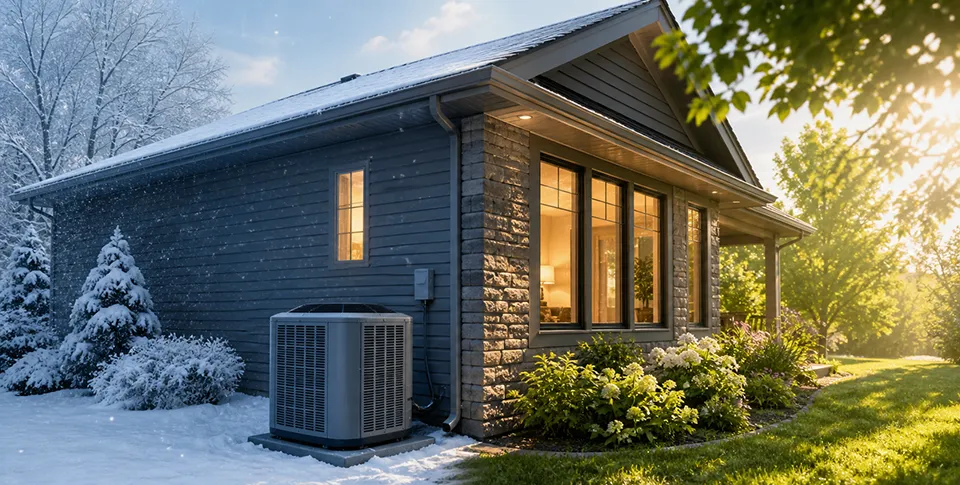
A new HVAC system also reduces the risk of a breakdown during extreme weather. That matters in places where winters are cold and summers are humid, including Milford, Central Massachusetts, and the surrounding communities. Reliable heating and cooling aren't luxuries when temperatures swing hard from season to season.
Homeowners planning to stay in the home for years often benefit most from replacement. They have more time to enjoy improved comfort, lower operating costs, quieter performance, and the security of a current warranty. Homeowners preparing to sell may benefit as well, since a newer system gives buyers added confidence.
Budgeting for HVAC Replacement in 2026
HVAC replacement cost varies from home to home. The final price depends on system type, home size, ductwork condition, efficiency level, installation requirements, and optional upgrades. A straightforward replacement will look different from a project that includes duct repairs, indoor air quality improvements, electrical updates, or high-efficiency equipment.
Higher-efficiency systems often cost more upfront but may lower operating costs over time. The best choice depends on your budget, how long you plan to stay in the home, your comfort priorities, and what incentives may be available.
Ask about rebates, tax credits, manufacturer promotions, and financing options when you get your estimate. Programs can change, and availability depends on equipment type, efficiency level, location, and utility provider. Here at Brad's Heating & Air, we can help you understand what may apply to your specific project.
Planned replacement gives you control. You can compare options, review warranties, ask about installation details, and schedule the work before the next weather event forces the issue. Planning ahead is almost always easier than replacing a failed system during a heat wave or a cold snap.
Final Thoughts
The best answer depends on system age, repair cost, comfort problems, energy use, maintenance history, and your long-term plans for the home. A minor issue on a newer system usually deserves a repair. Frequent breakdowns, high energy bills, poor comfort, major component failure, and advanced age usually point toward replacement.
If you're unsure which direction makes sense, a professional inspection takes the guesswork out of it. We can evaluate the equipment, check airflow, review repair history, compare repair and replacement costs, and explain which option makes sense for your specific situation.
For homeowners considering HVAC replacement in Milford, MA, HVAC repair in Central Massachusetts, or heating and cooling services throughout the area, the right guidance makes the decision far less stressful. Contact us today at (501) 330-8066 to schedule an inspection, request a repair estimate, or discuss replacement options. We'll evaluate your current equipment, walk you through what's available, and give you a straightforward quote so you can make the right call for your home.