




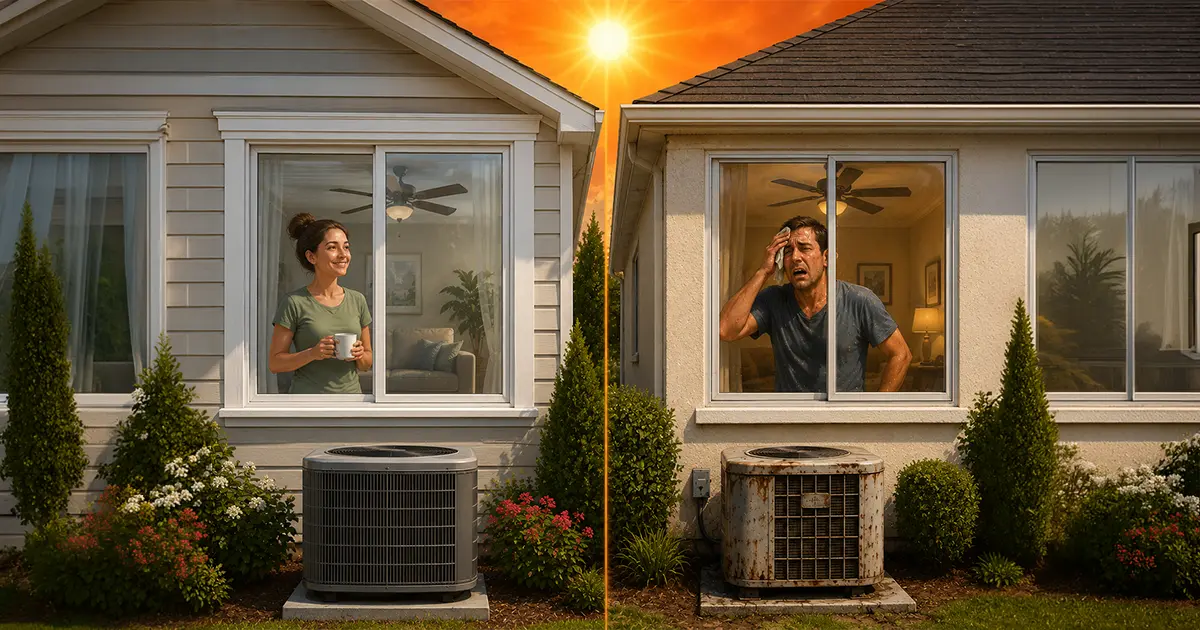
When the thermometer climbs into the upper 90s and the heat index shoves past 100, your air conditioner turns into the busiest thing in your house. The instinct is to slam the thermostat down and wait for a miracle. That instinct costs money, and it rarely cools your home any faster.
The good news is that a handful of smart moves around the house can keep you comfortable, ease the load on your system, and stop your cooling bill from spiraling when the heat refuses to let up.
Your AC Isn't a Time Machine
The most common heat wave mistake is dropping the thermostat to 65 and expecting the house to chill twice as fast.
Air conditioners don't work like that. They cool at a steady, fixed pace no matter how low you set the dial. Punch in an unusually low number and all you've done is make the system run longer, which burns more energy without shaving a single minute off the cool-down.
When it's brutally hot outside, plenty of systems simply can't hold a very low indoor temperature. That's normal, and it's especially true in older homes or houses where the insulation is not adequate.
Find a Setting You Can Live With
The U.S. Department of Energy suggests parking your thermostat around 78 degrees when you're home, assuming that feels okay for your family. Everybody has their own comfort zone, but nudging the setting a little higher than you'd expect can quietly trim a real chunk off your cooling costs.
Here's a number worth remembering. Bumping the thermostat up by a single degree can cut cooling costs by about three percent. That doesn't sound like much until you stack it across a long, sweaty summer.
Humidity Is the Real Villain
The temperature reading only tells you half the story.
Humidity often does more to wreck your comfort than the actual heat, and most homeowners underestimate it. As your air conditioner cools, it also pulls moisture out of the air, which is why a room can feel pleasant even when the thermostat isn't cranked way down.
That matters even more in muggy climates. Let humidity creep up inside and the whole house feels sticky and heavy, and you open the door to mold or mildew if that dampness sticks around.
Let Your Ceiling Fans Do Some Lifting

Ceiling fans don't cool a room. They move air across your skin so your body feels cooler, which is a different trick entirely.
That little bit of extra comfort is often enough to let you raise the thermostat a few degrees and never notice the change. In summer, your fans should spin counterclockwise so they push the air straight down and create a breeze you can actually feel.
One catch worth remembering. Fans cool people, not empty rooms, so switch them off when you walk out.
Shut the Sun Out
Direct sunlight can heat a room in a hurry.
Closing blinds, blackout curtains, or shades during the worst hours of the afternoon cuts down on solar heat gain and takes a load off your air conditioner. Plenty of homeowners swear by blackout curtains as the easiest upgrade they've ever made, and the pros back them up. Keeping sunlight out of the house is one of the simplest ways to help your system run efficiently.
Stop Your House From Making Its Own Heat
Your AC already has its hands full during a heat wave, so there's no reason to hand it extra work.
- Save the dishwasher and washing machine for the evening once the day starts to cool.
- Reach for the microwave, air fryer, slow cooker, or the outdoor grill instead of firing up the oven.
- Swap any lingering incandescent bulbs for LEDs, which throw off far less heat.
- Turn off lights and electronics you aren't using.
Every little heat source you shut down is one less thing your cooling system has to fight through on a scorching afternoon.
A Clean System Is a Cool System
Maintenance always matters, but it matters a lot more when the heat settles in and stays.
A dirty filter chokes off airflow, forcing your air conditioner to strain while running less efficiently. Most manufacturers want you checking the filter every month during heavy cooling season, then cleaning or replacing it whenever it looks grimy.
Having Brad out for a bi-annual tune-up helps a lot, as well. It catches the small stuff before it snowballs into an expensive breakdown, and those breakdowns always seem to hit during the hottest week of the year.
Insulation Might Beat the Thermostat
Some houses just hold onto cool air better than others.
A well-insulated home keeps conditioned air where you want it, so the AC cycles less often. Older houses with air leaks, thin attic insulation, or drafty windows heat back up fast, which means the system never gets a break.
More than a few homeowners have said that adding attic insulation slashed their summer electric bills, and their stories match what the experts recommend. Sealing leaks and beefing up insulation tends to deliver savings that stick around season after season.
Should You Kill the AC When You Leave?
This question resurfaces every single summer.
If you're just running to the store, leave the system alone. The house won't warm up much in that window, and whatever you'd save barely registers.
Gone for a full workday? Raising the thermostat seven to ten degrees while you're out will trim your energy use. In humid climates, though, shutting the system off completely for hours isn't a great idea, since indoor moisture can pile up faster than you'd think.
Heading out for a longer vacation calls for the same logic. Bump the thermostat up rather than holding your usual comfort setting. You'll save energy while still protecting the house from a humidity problem waiting to happen.
Smart Thermostats Take the Guesswork Out

Programmable and smart thermostats handle the temperature shuffle for you, easing off while you're gone and bringing the house back to comfortable before you walk in the door.
No more remembering to fiddle with the dial twice a day. Some of the smarter models even pick up on your routine over time and start trimming energy use on their own, with almost no effort on your part.
Brad has a selection of smart thermostats to choose from. Give him a call if you're interested in more information about these truly helpful devices!
Get Ready Before the Next One Hits
Waiting until the hottest day of the year to think about your cooling is a recipe for misery.
A little prep goes a long way.
- Book your annual HVAC maintenance before summer peaks.
- Swap out any dirty filters.
- Check the weatherstripping around your doors and windows.
- Inspect your attic insulation if the upstairs rooms always run warm.
- Know where your local cooling centers are in case an extended outage knocks out your power.
- Keep battery-powered fans, flashlights, water, and other emergency supplies available during severe weather.
Homeowners Never Run Out of Ideas
Ask around about beating the heat and you'll collect some entertaining answers.
Some folks swear by mini-split systems. Others insist that extra attic insulation was the smartest money they ever spent. One person joked that the cheapest way to lower the electric bill was to "turn it up to 80 and go hang out at someone else's house." Another suggested starting a "summer AC fund," because everybody knows July and August have a way of ambushing the monthly budget.
The jokes are fun, but the real long-term savings come from the boring stuff. Steady maintenance, a well-sealed home, sensible thermostat settings, and fewer heat sources indoors.
Final Thoughts
A long heat wave leans hard on your air conditioner, your home's efficiency, and your utility bill all at once.
Keep the blinds drawn, stay on top of humidity, change those filters, shore up your insulation, and set the thermostat somewhere sensible. None of it feels like much on its own. Put it all together during a stretch of relentless heat, though, and those small habits keep your home comfortable while your energy costs stay right where they belong.
And as always, call Brad if you need help. He's always a phone call away, and he will take care of you no matter what your cooling issues might be! Call us at (501) 330-8066 today!